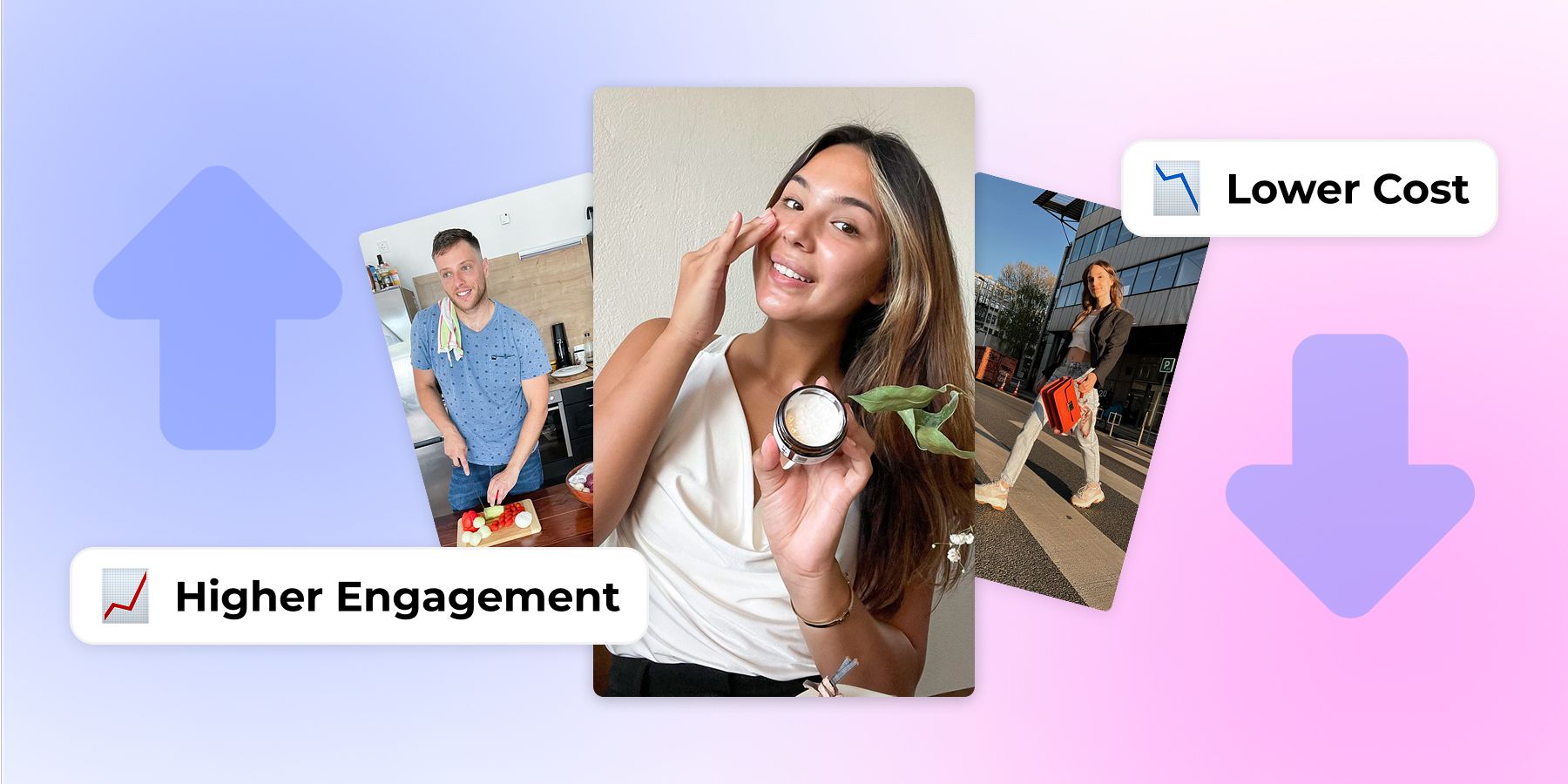


The Pre-Sell Effect: How UGC Prepares Buyers Before They Even Visit Your Website
Introduction — Why UGC Works Even Before the Click
Most brands think the customer journey begins when someone:
- visits their website
- views their product page
- clicks on their ad
- lands on a funnel
But that’s outdated thinking.
In the UGC era, the customer journey begins BEFORE the click —
inside the user’s mind and emotions.
Modern users get pre-sold before ever touching your website.
This is the Pre-Sell Effect —
a psychological phenomenon where UGC warms the buyer’s mindset so effectively that by the time they reach your website, they are:
✔ Trust-ready
✔ Emotionally convinced
✔ Low-resistance
✔ Problem-aware
✔ Product-aware
✔ Intent-ready
✔ Primed to buy
In traditional ads, you convince people AFTER they land.
In UGC-led ads, you convince people BEFORE they land.
This is why UGC delivers:
- Lower CPC
- Lower CPM
- Lower CAC
- Higher CTR
- Higher conversion rate
- Higher ROAS
- Higher LTV
Because users arrive half-convinced, not cold.
Let’s break this down.
1. Buyers Today Don’t Buy Cold — They Buy Pre-Sold
People don’t trust brands instantly anymore.
Buyers need:
- social proof
- stories
- relatability
- authenticity
- experience
- emotion
UGC delivers all of these before the user lands on your page.
The website becomes a confirmation page, not a “convince me” page.
This shift is everything.
2. The 7 Psychological Triggers of UGC That Pre-Sell Buyers
Trigger 1 — Relatability (Identity Match)
When buyers see someone like them using your product, their brain says:
“If it works for them, it will work for me.”
Identity-based trust.
Trigger 2 — Emotional Storytelling
UGC creators share:
- their struggles
- their pain
- their transformation
- their journey
The user emotionally experiences this —
priming them to desire the solution.
Trigger 3 — Authentic Reactions (The Trust Shortcut)
Real facial expressions:
- surprise
- relief
- joy
- confidence
These emotions bypass skepticism and build subconscious trust.
Trigger 4 — Real-Life Demonstration
UGC shows:
- usage
- texture
- setup
- results
- application
The viewer FEELS like they’ve already tried the product.
Trigger 5 — Mini Before/After Proof
Visual micro-transformations act as powerful trust builders.
Trigger 6 — Low-Production Realness
Low production = high authenticity.
Studio production = salesy.
UGC feels like advice, not advertising.
Trigger 7 — Social Proof (Comments, Views, Saves)
Every engagement acts as proof of value.
The buyer arrives on your website PRE-CONVINCED.
3. Pre-Sell Funnel VS Traditional Funnel
OLD Funnel (Brand Ads):
Impression → Click → Website → Convince → Buy
UGC Funnel (Pre-Sell):
Impression → Convince → Emotion Trigger → Trust Trigger → Click → Buy
The “convincing” now happens BEFORE the click.
This reduces friction massively.
4. How UGC Warm-Ups Reduce Your CAC
When a user is pre-sold:
✔ They click faster
✔ They scroll slower on website
✔ They convert faster
✔ They abandon less
This reduces CAC by 30–70%.
Because they are already:
- belief-ready
- trust-ready
- desire-ready
UGC removes the coldness from cold traffic.
5. The 3 Types of UGC That Pre-Sell Best
A) Problem-First Storytelling UGC
UGC that exposes the problem → creates emotional readiness.
Example:
“I used to hate my oily skin…”
“I had the worst hairfall after monsoon…”
These Reels make users identify with the pain.
B) Demo + Reaction UGC
Shows the product + shows how creator FEELS.
This creates product familiarity before visiting the page.
C) Emotional Testimonials
Not scripted testimonials.
REAL emotional validation.
This acts as social proof before the website loads.
6. The Pre-Sell Chain Reaction (The 4 Stage Model)
Stage 1: Awareness
“OH — this is my problem.”
Stage 2: Identification
“This creator feels like me.”
Stage 3: Expectation Building
“This product might solve my issue.”
Stage 4: Website Visit
“Let me check the details.”
By the time they click, they’re NOT cold.
They’re warm & ready.
7. Real Reason UGC Reduces Bounce Rate on Websites
Because UGC already explained:
- the benefit
- the usage
- the story
- the emotion
- the result
So the website no longer has to “convince” them —
it only has to “confirm” their decision.
This is why UGC → Landing Page = perfect conversion path.
8. The Pre-Sell Effect Is Why UGC Ads Run for 30–90 Days Without Fatigue
People don’t get tired of:
- real stories
- real faces
- real experiences
Studio ads fatigue quickly.
UGC ads feel new every time.
9. How Brands Can Use the Pre-Sell Effect Immediately
✔ Create problem-first UGC
✔ Add emotion-heavy storytelling
✔ Show real demos
✔ Use multiple creators
✔ Keep scripts conversational
✔ Show micro-results
✔ Add social-proof overlays
Done right → website becomes a closing machine.
10. Creator Navigator
Brands struggle to find creators who can produce:
- emotional stories
- relatable hooks
- authentic reactions
- powerful pre-sell angles
Creator Navigator solves this problem by connecting brands to creators who naturally produce pre-sell UGC that warms up buyers before they click.
This means:
✔ Higher ROAS
✔ Lower CAC
✔ More add-to-cart
✔ Better scaling
✔ Better conversion rate
The Pre-Sell Effect becomes automatic.
Conclusion — UGC Doesn’t Replace the Website. It Prepares the Buyer FOR the Website.
The Pre-Sell Effect is the new competitive advantage.
Because buyers trust:
- real people
- real emotions
- real experiences
UGC convinces FIRST.
Your website converts SECOND.
Brands who master pre-sell UGC will dominate 2025.
Brands who rely solely on landing pages will fall behind.
✅ BLOG 2 (1500+ WORDS)
The UGC Density Model: Why Brands Need 10x More Creators Than They Think



The UGC Density Model: Why Brands Need 10x More Creators Than They Think
Introduction — Brands Don’t Fail Because of Bad Products. They Fail Because of LOW CREATOR DENSITY.
Most D2C brands run ads with:
- 1 creator
- 2 creators
- 3 creators
And then complain:
- “Our ads fatigued.”
- “Our ROAS dropped.”
- “Our creatives stopped performing.”
Of course they did.
Because you cannot scale with low creator volume.
Winning brands run:
- 30 creators
- 50 creators
- even 100 creators monthly
This is called:
The UGC Density Model — the #1 requirement for scaling profitably.
Low density = low results.
High density = high scale.
Let’s break down why.
1. What Is UGC Density?
UGC Density =
The number of different creators + different faces + different voices a brand uses in a given month.
This includes:
- testimonials
- demos
- emotional stories
- hooks
- problem-solution
- comparison videos
- reactions
- before/after
The higher your creator density, the faster you scale.
2. Why Brands Need 10x More Creators Than They Think
Because people get bored easily.
The algorithm gets bored.
Audiences get bored.
Your funnel gets bored.
Here’s the hard truth:
**One creator cannot scale a brand.
Ten creators cannot scale a brand.
Thirty creators CAN.**
More creators =
More angles =
More hooks =
More emotions =
More relatability =
More demographic match =
More storytelling =
More scale.
3. The 4 Reasons UGC Density Drives ROAS
Reason 1 — Faces Reduce Ad Fatigue
Different faces =
Reduced fatigue =
Longer ad lifespan =
Lower cost.
One face expires in 7–14 days.
Ten faces last 30–60 days.
Reason 2 — Different Creators Appeal to Different Audiences
Example:
- Mom creators → mom buyers
- Gen Z creators → Gen Z buyers
- Male creators → male buyers
- Skincare creators → skincare buyers
More faces → wider emotional reach → more conversions.
Reason 3 — Every Creator Brings a New Hook
Hooks drive attention.
Different creators =
Different hook styles.
More hooks =
More scroll-stoppers =
More ad wins.
Reason 4 — More Creators = More Story Diversity
Stories sell.
You need creators telling:
- acne stories
- hairfall stories
- confidence stories
- comparison stories
- routine stories
- emotional stories
Diversity creates conversion.
4. The Exact Creator Numbers Every Brand Needs
Small brand: 10 creators/month
Growing brand: 25 creators/month
Scaling brand: 50 creators/month
Aggressive brand: 100 creators/month
This is the UGC Density Model benchmark.
Anything below this makes scaling inconsistent.
5. Why Agencies Fail — They Don’t Maintain Creator Density
Agencies produce:
- 5 videos
- 10 videos
- same face
- same style
- same environment
That’s NOT density.
Density =
Many creators, many stories, many emotions.
6. Why UGC Density Lowers Ad Cost
High density:
✔ Extends ad life
✔ Reduces CPC
✔ Reduces CPM
✔ Reduces CAC
✔ Improves CTR
✔ Adds variety
✔ Decreases user fatigue
✔ Wins auctions more
✔ Outperforms competitors
The algorithm LOVES variety.
Density = algorithm advantage.
7. The UGC Density Cycle (Scaling System)
PHASE 1 — 10 creators
Test, test, test.
PHASE 2 — 30 creators
Find winning patterns.
PHASE 3 — 50 creators
Duplicate winners → scale.
PHASE 4 — 100 creators
Dominate the entire niche.
This is how big D2C brands grow.
8. How to Implement the UGC Density Model
✔ Hire multiple creators monthly
✔ Use different genders
✔ Use different backgrounds
✔ Use different storytelling styles
✔ Shoot different angles
✔ Collect 100+ creatives monthly
✔ Build an internal UGC pipeline
The formula is simple:
More creators = More conversions.
9. UGC Density + Creator Navigator
Brands struggle to find:
- enough creators
- enough variety
- enough faces
- enough styles
- enough storytelling
That’s why Creator Navigator is essential.
It helps brands build:
✔ 30–100 creator pipelines
✔ Massive UGC libraries
✔ High-performance creative waves
✔ Endless storytelling variations
✔ Zero fatigue scaling
Creator Navigator =
The engine behind UGC Density.
Conclusion — You Can’t Scale With 3 Creators. You Need 30.
The future of scaling is simple:
**More creators = more trust.
More trust = more conversions.
More conversions = more profit.**
This is the UGC Density Model.
Brands who adopt it grow.
Brands who ignore it stay stuck.
UGC Density = the unfair advantage of D2C.