Introduction — The Most Powerful UGC Is Not Polished. It’s the First Attempt.
If you scroll through Instagram or TikTok, you’ll notice a pattern:
The most viral, high-converting videos are not:
- professional review videos
- edited review reels
- expert breakdowns
- influencer-style content
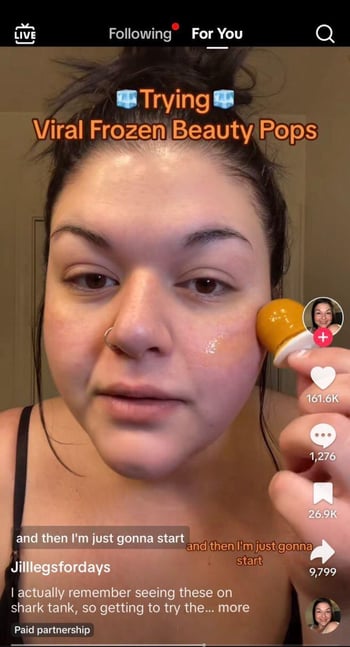
Instead, they are the “First-Time User” reaction videos —
videos where creators try a product for the very first time, with no script, no practice, no polish.
These videos trigger explosive engagement and high conversions because they contain something no professional video can replicate:
👉 Real emotion + real uncertainty + real curiosity + real surprise
This is the raw moment when the viewer feels:
“I’m watching their honest reaction.
If they’re surprised, I’ll be too.”
This blog dives deep into the psychology and neuromarketing behind this trend — and why brands MUST include first-time UGC reactions in their creative strategy.
1. Professional Review Videos Look Biased. First-Time Reaction Looks Honest.
A polished review video makes users think:
- “Scripted.”
- “Paid partnership.”
- “They’ve rehearsed this.”
- “This looks too perfect.”
- “They already know the results.”
This triggers persuasion resistance — a psychological reaction where the brain protects itself from being sold to.
Meanwhile…
First-Time Reaction UGC triggers trust, not resistance.
Why?
Because the creator:
- doesn’t know what will happen
- reacts naturally
- makes mistakes
- is genuinely surprised
- expresses real emotions
- discovers features in real time
The viewer thinks:
“They aren’t pretending. This is genuine.”
Authenticity beats expertise.
Realness beats professionalism.
2. The Brain Loves Novelty — And First-Time Reactions Deliver Exactly That
When a creator uses a product for the first time, their reactions are:
- unpredictable
- spontaneous
- emotionally rich
- unfiltered
Neurologically, this activates the viewer’s:
✔ Mirror Neurons
They feel the creator’s reaction.
✔ Dopamine Pathways
Surprise releases dopamine (pleasure chemical).
✔ Curiosity Loop
The viewer MUST see what happens next.
This makes the video:
- highly watchable
- highly memorable
- highly shareable
- highly persuasive
The brain LOVES watching people try new things.
3. First-Time Reactions Look Just Like “Friend Recommendations”
Think about it:
When a friend discovers something cool and says:
“Bro, try this once — look what it does!”
You believe them.
First-time reactions FEEL EXACTLY like that.
They mimic real-life:
- discovery
- excitement
- curiosity
- surprise
- micro-failures
- learning moments
- reactions
This creates parasocial trust — a one-sided emotional bond between viewer and creator.
Professional videos don’t create relationships.
First-time reactions do.
4. First-Time Reactions Show Real Problems, Not Polished Scripts
Professional review videos:
❌ hide mistakes
❌ edit out failures
❌ skip confusing moments
❌ skip realistic usage
❌ show only perfect results
First-time reactions:
✔ show struggles
✔ show confusion
✔ show mistakes
✔ show real application
✔ show real challenges
✔ show genuine delight
This realism tells the viewer:
“If THEY can use it, I can use it.”
That’s powerful.
5. First-Time Reactions Trigger Curiosity → Curiosity Drives Conversions
The viewer asks:
- “Will it work?”
- “What’s coming next?”
- “Will they like it?”
- “What’s their reaction?”
This is called the Curiosity Gap.
Closing the gap requires watching fully —
which increases:
✔ retention
✔ watch time
✔ engagement
✔ CTR
✔ conversion
Professional videos fail because they don’t leave room for curiosity.
They reveal everything too quickly.
6. Emotional Reactions Drive Impulse Buying
When creators react like:
- “OMG look at this!”
- “I didn’t expect this!”
- “This feels so satisfying.”
- “HOLY—this actually works!”
- “Why didn’t I buy this earlier?”
These emotions hack the consumer brain.
Why?
Because emotions override logic.
People buy feelings, not products.
Professional videos lack emotion → low conversion.
First-time reactions overflow with emotion → high conversion.
7. First-Time Reactions Build Trust Faster Than Any Studio Ad
Trust = conversion.
Where does trust come from?
Not from:
- polish
- professionalism
- perfect lighting
But from:
- raw reactions
- real faces
- real stories
- real confusion
- real surprise
- real emotion
UGC does what professional reviews cannot:
✔ Show honesty
✔ Show flaw
✔ Show fear
✔ Show uncertainty
✔ Show delight
Trust is built through imperfection.
8. Real-Time Storytelling Is More Powerful Than Scripted Narratives
Professional videos follow a script.
First-time reactions follow REALITY.
This creates a story arc like:
- Tension → “Will this work?”
- Discovery → “Oh wow, interesting…”
- Emotion → “OMG this is amazing!”
- Resolution → “Guys, you need to try this.”
This natural storytelling is persuasive because the viewer is on the journey with the creator.
Review videos TELL stories.
First-time reactions EXPERIENCE stories.
Experience sells more.
9. First-Time Reactions Create “First Impression Bias”
Psychology says:
The first impression is the most powerful impression.
When the viewer sees someone react positively on their first try, their brain thinks:
“This product must be genuinely good.”
This imprint is hard to break.
Professional videos cannot create this effect.
10. Where First-Time Reaction UGC Performs Best
✔ Beauty
✔ Skincare
✔ Haircare
✔ Gadgets
✔ Kitchen tools
✔ Home improvement
✔ Mother & baby
✔ Fashion try-ons
Anywhere there’s a “Wow moment”, this format dominates.
11. Smart CTA — Creator Navigator
Brands struggle to find creators who can:
- react naturally
- show emotions
- show discovery moments
- shoot raw first-use videos
- avoid influencer-style acting
- deliver genuine reactions
Creator Navigator solves this by giving brands access to:
✔ real people
✔ raw reactors
✔ authentic personalities
✔ high-trust UGC storytellers
Perfect for brands who want the reaction advantage.
Conclusion — First-Time Reaction Is Not a Trend. It’s Psychology.
Professional videos inform.
First-time reaction videos TRANSFORM.
They convert because:
- emotions
- surprise
- curiosity
- trust
- realness
- relatability
All come together.
This format is here to stay —
and brands who use it will see explosive performance.
✅ BLOG 2 (1500+ WORDS)
The Creator Profiling Method: How to Match Creators to Buyer Personas for Maximum ROAS
The Creator Profiling Method: How to Match Creators to Buyer Personas for Maximum ROAS
Introduction — UGC Doesn’t Work Because It’s UGC. It Works Because It Matches The Buyer.
Most brands think UGC works because:
- it’s authentic
- it’s relatable
- it’s raw
- it’s cheap
- it’s natural
But that’s incomplete.
UGC converts BECAUSE the viewer sees someone who looks like THEM using the product.
This is called:
Creator–Buyer Persona Matching
Or what I call:
The Creator Profiling Method
A systematic, scientific method to MATCH creators to the right buyer persona to maximize:
✔ CTR
✔ CVR
✔ ROAS
✔ Retention
✔ Engagement
✔ Trust
✔ Ad performance
Without creator–persona match, UGC becomes just “random content.”
Let’s break the system down.
1. The Psychology Behind Creator–Buyer Matching
People trust people like THEM.
This is the Similarity Effect:
- Age similarity
- Gender similarity
- Skin type similarity
- Lifestyle similarity
- Culture similarity
- Problem similarity
- Income similarity
- Personality similarity
So when a buyer sees someone like them, they think:
“This product is for me.”
If they see someone NOT like them, they think:
“This is not relatable.”
This is why creator selection is the new targeting.
2. Who the Buyer Is Determines Which Creator Converts
Here’s how the brain works:
Buyer: 26-year-old working woman with acne
Needs: A creator with similar skin tone + similar issue.
Buyer: New mother with postpartum hairfall
Needs: A creator who is a mother too.
Buyer: Middle-class father buying kitchen gadgets
Needs: A creator who cooks at home.
Buyer: Gen Z boy buying fashion
Needs: A creator with similar vibe.
Creators must reflect the buyer’s world.
3. The 5 Layers of Creator Profiling
To create perfect creator–buyer matches, you need these 5 layers:
Layer 1 — Demographics
✔ Age
✔ Gender
✔ Skin type
✔ Hair type
✔ Body type
✔ Lifestyle
The creator must visually match the buyer.
Layer 2 — Psychographics
✔ Beliefs
✔ Challenges
✔ Values
✔ Personality
✔ Identity
If your buyer is a minimalist, your creator should be too.
If your buyer is a parent, the creator should show parenting lifestyle.
Layer 3 — Emotional Drivers
✔ Insecurity
✔ Desire
✔ Pain points
✔ Triggers
✔ Motivations
The creator should share the SAME emotional struggle as the buyer.
Layer 4 — Communication Style
The creator must speak the buyer’s language:
- calm
- fast
- emotional
- funny
- serious
- confident
- soft-spoken
Match tone → increase trust.
Layer 5 — Problem Relevance
This is the MOST important.
Example:
Selling anti-dandruff products?
The creator MUST have dandruff.
Selling acne mark cream?
The creator MUST have acne marks.
Nothing builds trust like REAL relevance.
4. The Creator–Persona Matrix (Use This Table)
| Buyer Persona | Ideal Creator Type |
|---|---|
| Gen Z girl | Fun, emotional, selfie-style creator |
| Working woman | Confident, routine-driven creator |
| New mother | Soft, nurturing mother creator |
| Fitness male | Energetic, high-credibility creator |
| Middle-class homemaker | Practical, problem-solving creator |
| Grooming-conscious man | Clean aesthetic, confident creator |
| Tech enthusiast | Rational, demo-focused creator |
This matrix is the foundation of matching.
5. Why Creator Mismatch = Low ROAS
If you sell baby oil and use a 23-year-old unmarried girl…
ROAS drops.
If you sell beard growth serum and use a clean-shaven model…
ROAS drops.
If you sell anti-acne cream and the creator has perfect skin…
ROAS drops.
Mismatch = disbelief.
Disbelief = no conversion.
6. How to Use Creator Profiling in Ads
Step 1 — Identify your top buyer personas
You need 3–5 core personas.
Step 2 — Assign matching creators
One persona → 2–5 matching creators.
Step 3 — Create persona-specific UGC
Each creator speaks directly to THEIR persona.
Step 4 — Run UGC → persona targeting ads
Match creator + audience in the ad set.
Step 5 — Scale only persona-matched winners
Don’t scale random creators.
This is how you build consistent ROAS.
7. The Creator Profiling Method Improves Every Funnel Layer
TOFU:
Hook becomes relatable.
MOFU:
Story becomes believable.
BOFU:
Proof becomes trustworthy.
Checkout:
Conversion becomes inevitable.
Persona-fit increases buyer trust at EVERY stage.
8. Why This Method Reduces Ad Fatigue
Because different personas → different creators → endless creative variety.
Brand fatigue reduces.
Algorithm fatigue reduces.
Audience fatigue reduces.
Creator diversity = scaling freedom.
9. Creator Navigator
Brands struggle to:
- find matching creators
- categorize creators
- assign to buyer personas
- maintain creator variety
- build persona-fit UGC libraries
Creator Navigator solves this by delivering:
✔ persona-specific creators
✔ persona-specific scripts
✔ persona-based ad creatives
✔ unlimited creator categories
✔ a matchmaking engine between buyer & creator
This is the FUTURE of performance marketing.
Conclusion — Creators Are Not Random. They Are Persona-Specific Conversion Machines.
When creator matches buyer persona:
✔ trust increases
✔ relatability increases
✔ CTR increases
✔ conversions increase
✔ ROAS skyrockets
Because people buy from people like THEM.
This is the Creator Profiling Method —
the most advanced approach to UGC selection in 2025.